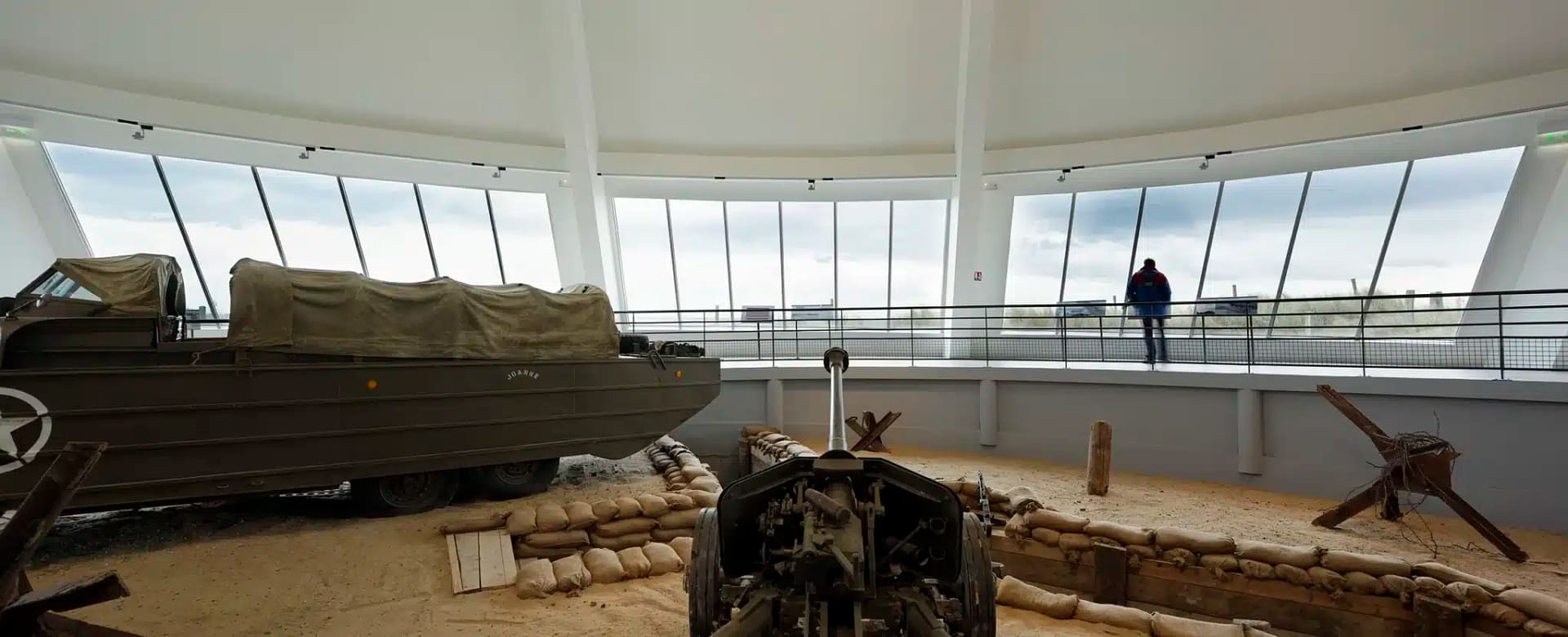

But what exactly was D-Day? When did it take place, and why did the Allies choose the shores of Normandy for their assault? From the military planning behind the Normandy invasion to the famous landing beaches and memorial sites that can still be visited today, this guide explores every major aspect of the operation. Located on the very beach where American troops came ashore on June 6, 1944, the Utah Beach Landing Museum offers one of the most important starting points for discovering the history and legacy of Normandy D-Day.
Historical Context: why the Normandy Landings happened
By 1944, the military situation in Europe forced the Allies to open a new front in Western Europe. While Soviet forces were pushing back against Germany on the Eastern Front, they were suffering enormous losses in the process. At the same time, the Allied campaign in Italy was advancing slowly. To defeat Nazi Germany and weaken the Third Reich, the Allies needed a decisive breakthrough on French soil.
France under German occupation in 1944
After France surrendered in June 1940, the country remained under German occupation for four years. The Nazi regime controlled the territory through repression and military force, while French Resistance networks operated in secret across the country. From London, Charles de Gaulle and the Free French Forces continued to organize opposition and keep alive the hope of liberation.
By 1944, anticipation was growing throughout France. At the same time, German troops intensified the construction of the Atlantic Wall, a vast coastal defense system ordered by Hitler to prepare for an Allied invasion. Bunkers, artillery positions, minefields, and obstacles were installed along the French coastline in anticipation of the massive Allied landings that would follow in June 1944.
The strategic goals of the Allied Forces
The objectives behind the Normandy invasion were clear. Allied commanders aimed to break through the Atlantic Wall, establish a secure foothold in France, and begin the advance toward Germany while easing pressure on Soviet forces in the east.
To determine where the Normandy D-Day landings should take place, Allied planners evaluated several strategic factors:
- wide sandy beaches suitable for amphibious landings
- close proximity to British airfields for air support
- open terrain allowing armored troop movement inland
- access to a deep-water port capable of supplying the invasion force
Normandy, stretching from the Orne estuary to the Cotentin Peninsula, met all of these requirements and became the chosen location for the D-Day landings in France.
Preparing Operation Overlord
Operation Overlord was the result of years of planning and coordination on an unprecedented scale. The project officially began during the Trident Conference in Washington. Every aspect of the Normandy invasion, from troop deployment to logistics and deception strategies, required massive human and material resources.
Why Normandy was chosen for the D-Day Landings
Before the Allies launched the D-Day Normandy landings, several possible invasion zones were considered, including Brittany, Normandy, and the Pas-de-Calais region.
Brittany was ultimately rejected because it was too far from British air bases and supply lines. Pas-de-Calais, although geographically closer to England, posed another problem: German forces expected an attack there and had heavily fortified the coastline.
In the end, Normandy emerged as the most favorable place to land. Its long sandy beaches were suitable for amphibious assaults, while the nearby port of Cherbourg offered a deep-water harbor that would be essential for supplying Allied troops after the landings.
Operation Fortitude and the Allied Deception Campaign
To keep the real invasion site secret, the Allies launched Operation Fortitude, one of the most successful military deception campaigns of World War II.
The plan aimed to convince German commanders that the Normandy landings in France were only a diversion and that the main attack would occur in Pas-de-Calais. To support the deception, the Allies created an entirely fictitious army known as the First United States Army Group (FUSAG), supposedly led by General George S. Patton.
Inflatable tanks, fake military installations, dummy landing craft, and heavy radio traffic were staged across southeast England, particularly in Kent. The operation proved remarkably effective. Even after D-Day began, German commanders including Gerd von Rundstedt and Erwin Rommel kept large forces of the German Fifteenth Army (around 150,000 men) stationed in Pas-de-Calais. And they did so because they were convinced a second invasion was still coming.
The Allied Forces: troops, equipment, and international cooperation
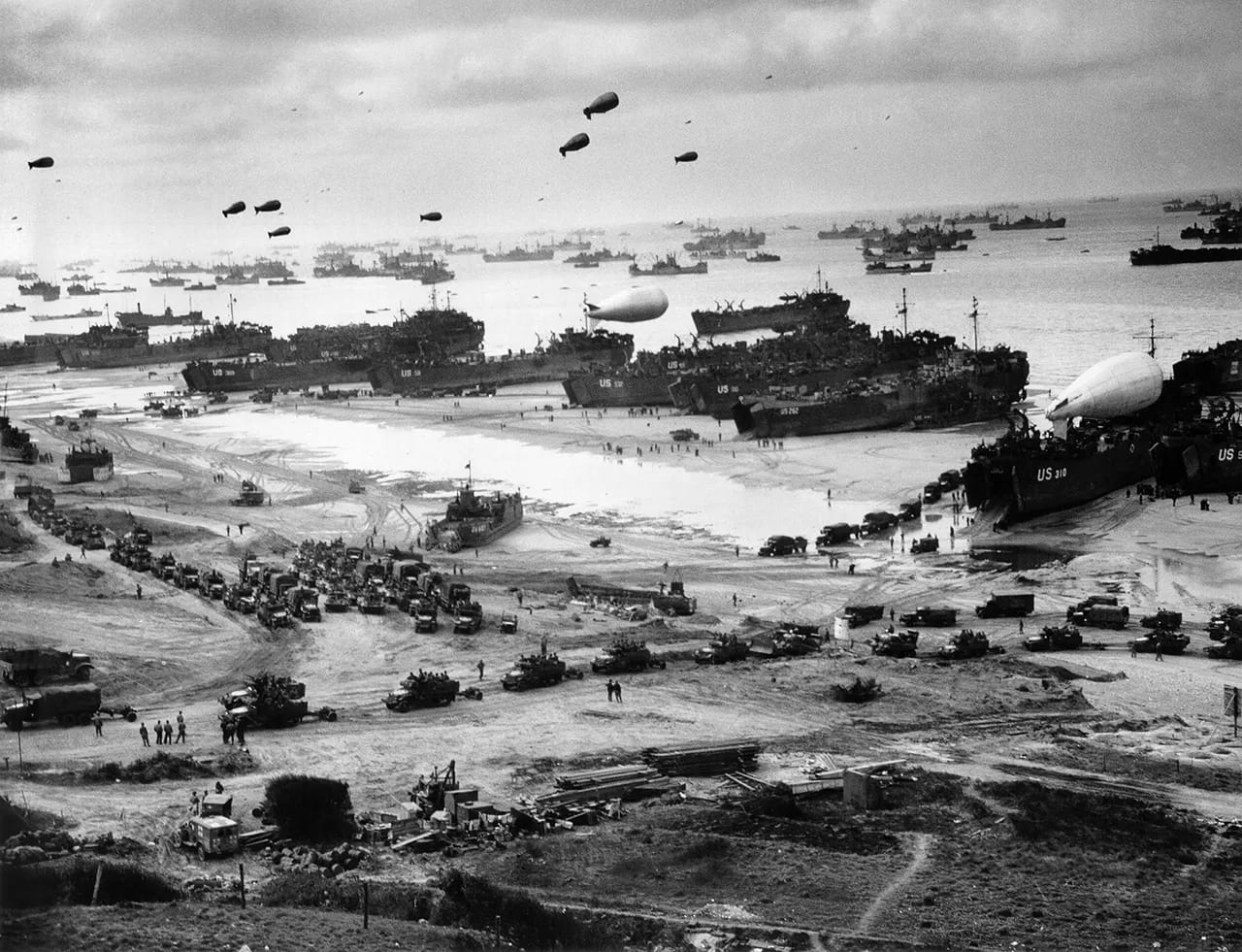
On the eve of D-Day, southern England had become a massive military staging ground. The scale of the Normandy invasion was unlike anything the world had seen up to that point.
More than two million Allied personnel were involved in the preparation of Operation Overlord. The invasion force included approximately:
- 1,300 transport ships
- 4,000 landing craft
- 11,600 aircraft
- 19,000 military vehicles
On June 6, 1944, around 133,000 soldiers landed on the beaches of Normandy, supported by more than 23,000 airborne troops dropped behind enemy lines.
Although the United States, the United Kingdom, and Canada provided the majority of troops during Normandy D-Day, the operation also included French, Polish, Norwegian, Dutch, Belgian, Australian, Danish, and New Zealand forces. The entire operation was led by Dwight D. Eisenhower, who served as Supreme Commander of the Allied Expeditionary Force.
June 6, 1944: how D-Day unfolded hour by hour
The night before the D-Day Normandy landings was marked by rough weather and uncertainty. Despite dangerous conditions in the English Channel, Dwight D. Eisenhower made the final decision to launch the operation. It was one of the most important military decisions of World War II.
The night airborne drops: the 82nd and 101st airborne divisions
Shortly after midnight, the first Allied troops crossed into occupied France by air. The American 82nd and 101st Airborne Divisions parachuted into the Cotentin Peninsula behind Utah Beach with a critical mission: secure roads and bridges, disrupt German defenses, and prevent counterattacks against the landing beaches.
The airborne drops were chaotic and costly. Strong winds, darkness, and anti-aircraft fire scattered many paratroopers far from their designated landing zones.
Even so, the airborne operation achieved a major strategic effect. The widespread presence of Allied paratroopers created confusion among German forces and slowed their response during the opening hours of the Normandy invasion.
The assault on the five D-Day Beaches
At dawn, Allied infantry forces launched amphibious assaults across five beaches stretching roughly 50 miles along the Normandy coast. From west to east, the landing sectors were:
- Utah Beach: American sector on the Cotentin coast and home today to the Utah Beach Landing Museum
- Omaha Beach: American sector between Sainte-Honorine-des-Pertes and Vierville-sur-Mer, where some of the heaviest fighting occurred
- Gold Beach: British sector near Arromanches and Ver-sur-Mer
- Juno Beach: Canadian sector centered around Courseulles-sur-Mer
- Sword Beach: British and Free French sector stretching from Ouistreham to Lion-sur-Mer
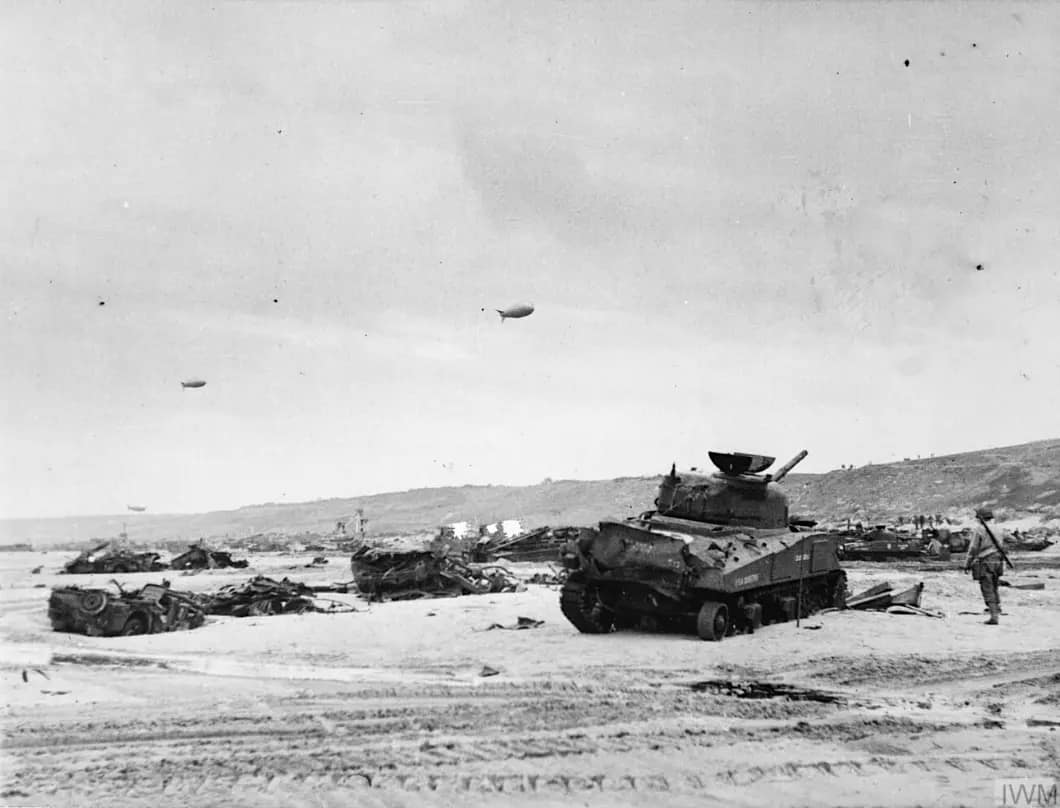
Among all the landing zones, Utah Beach saw the fastest Allied progress during the first hours of D-Day. By the end of June 6, approximately 23,250 American soldiers and 1,700 vehicles had landed there. Casualties, while significant, were lower than expected: 197 soldiers were killed and 60 were reported missing.
Omaha Beach: the deadliest assault of D-Day
The situation at Omaha Beach was dramatically different. There, American troops encountered heavily fortified German defenses positioned on cliffs overlooking the shoreline. As landing craft approached the beach, soldiers came under devastating machine-gun and artillery fire.
Many amphibious tanks sank before reaching shore, leaving infantry units exposed on the open beach. The intensity of the fighting and the heavy casualties earned Omaha Beach the lasting nickname “Bloody Omaha.”
Despite enormous losses, American forces gradually pushed inland throughout the day with support from Allied naval bombardments offshore. By late afternoon, the beachhead had finally been secured. Today, overlooking Omaha Beach, the Normandy American Cemetery honors the memory of the 9,387 American soldiers buried there after the Battle of Normandy.
The Battle of Normandy: June to August 1944
The D-Day Normandy landings marked the beginning of a much longer and more brutal campaign. Although the beaches were secured by the evening of June 6, Allied forces struggled to connect their beachheads and advance inland as quickly as planned. The Battle of Normandy would continue for nearly three months, ending only at the close of August 1944.
Fighting through the Normandy Bocage
Once the initial landing zones had been secured, Allied troops encountered a type of terrain they had seriously underestimated: the Normandy bocage. The countryside was divided by dense hedgerows, steep embankments, and narrow sunken roads. Together, they created a kind of natural defensive maze. This landscape slowed the Allied advance and limited the effectiveness of tanks and armored vehicles. Every field, every crossroads, and every village became a fiercely contested battlefield.
The city of Caen, originally expected to fall on the first day of the Normandy invasion, was not fully captured until more than a month later. Saint-Lô resisted until July 19. On June 11, Allied forces finally succeeded in linking their separate beachheads into one continuous front.
A major breakthrough came with Operation Cobra, launched near Saint-Lô on July 25, 1944. The offensive allowed American forces to break through German lines and push south across France. By mid-August, German troops were trapped near Falaise in what became known as the Falaise Pocket, leading to the destruction of much of the German army in Normandy.
Paris was liberated on August 25, 1944, with a decisive contribution from Free French forces led by General Philippe Leclerc de Hauteclocque.
Human Cost: honoring those who died in Normandy
The Normandy D-Day landings alone resulted in more than 10,000 Allied casualties, including approximately 4,400 confirmed deaths. American forces suffered around 6,600 casualties, while British and Canadian forces recorded roughly 3,700. German losses on June 6 are estimated between 4,000 and 9,000 men.
Over the course of the entire Battle of Normandy, Allied casualties approached 50,000 soldiers. But German forces suffered even more, with approximately 63,000 men killed.
The civilian population also paid a devastating price. Bombings, artillery fire, and ground fighting caused the deaths of at least 20,000 civilians across Normandy during the campaign.
D-Day Beaches and memorial sites to visit in Normandy
Today, Normandy is one of Europe’s key regions of remembrance. Its beaches, military cemeteries, museums, and preserved battlefields offer visitors a powerful connection to the events of June 1944 and the history of the D-Day Normandy landings.
The Five D-Day Beaches: where are they located?
The five landing beaches stretch across roughly 50 miles of coastline, from the Cotentin Peninsula in western Normandy to the Orne estuary in the east. Each beach played a unique role during the Normandy invasion, and all remain accessible to visitors today.
- Utah Beach (Sainte-Marie-du-Mont, Manche): the westernmost landing beach and home to the Utah Beach Landing Museum
- Omaha Beach (Saint-Laurent-sur-Mer and Vierville-sur-Mer, Calvados): the site of the deadliest American assault during D-Day and home to the Normandy American Cemetery
- Gold Beach (Arromanches, Calvados): where the remains of the Mulberry artificial harbor can still be seen offshore
- Juno Beach (Courseulles-sur-Mer, Calvados): the primary Canadian landing sector and location of the Juno Beach Centre
- Sword Beach (Ouistreham, Calvados) — where British and Free French commandos came ashore led by the Kieffer commandos
Along much of the Normandy coastline, visitors can still see remnants of Hitler’s Atlantic Wall, including bunkers, trenches, gun emplacements, and barbed wire defenses that once formed part of the German coastal fortifications.
Military cemeteries and Memorials
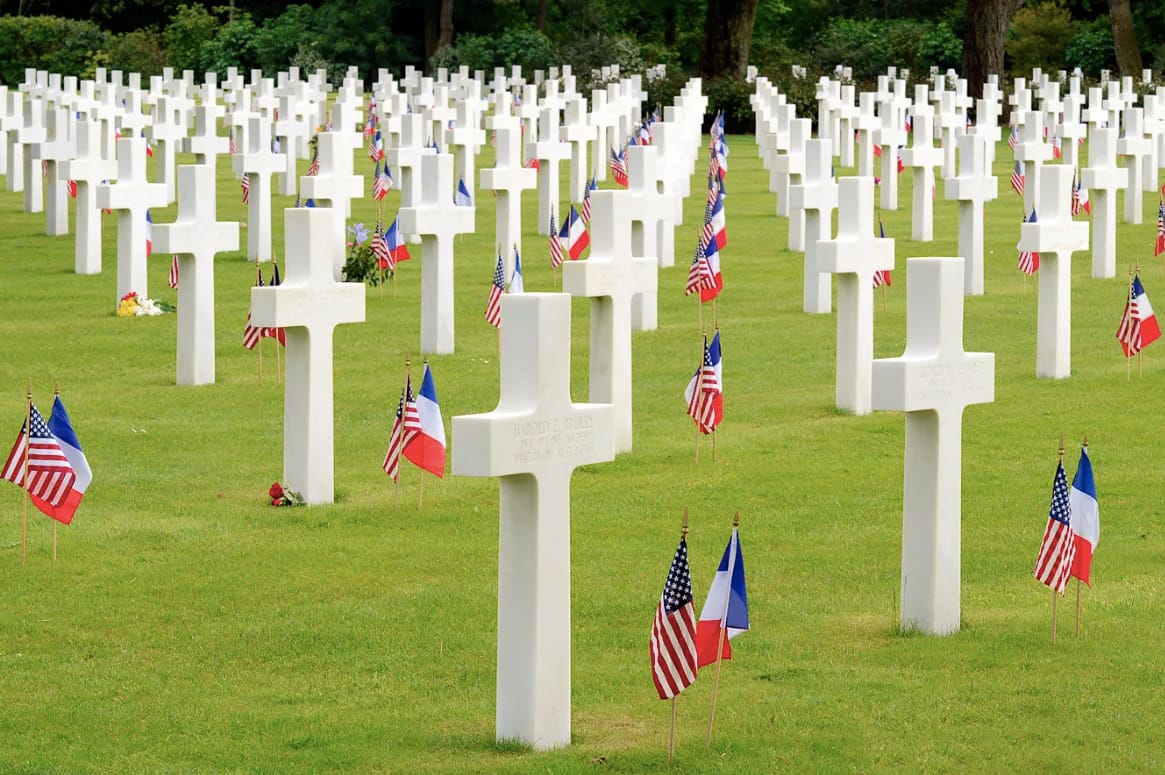
One of the most visited memorial sites in Normandy is the Normandy American Cemetery, which overlooks Omaha Beach. More than one million visitors come here every year to pay tribute to the American soldiers who died during the Normandy campaign.
Spread across 172 acres, the cemetery contains 9,387 white marble headstones, including the graves of 307 unidentified soldiers. Nearby, the Walls of the Missing bear the names of 1,557 Americans whose remains were never recovered.
A short distance away, Pointe du Hoc still preserves bomb craters, bunkers, and cliffside fortifications in much the same condition as they were after the battle. The German war cemetery at La Cambe, where more than 21,000 German soldiers are buried, serves as another reminder of the immense human cost of the Normandy invasion on all sides.
The best D-Day museums in Normandy
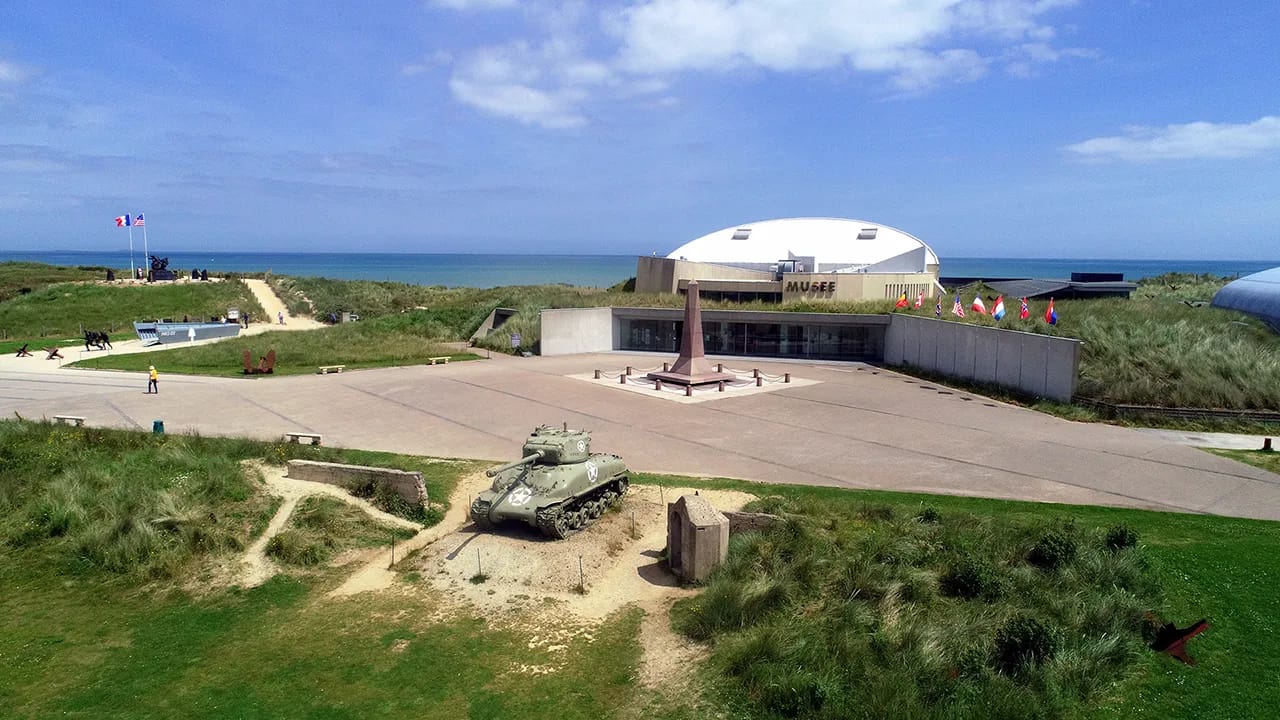
Built directly on the remains of the former German strongpoint WN5, the Utah Beach Landing Museum stands on the exact site where American troops landed on June 6, 1944.
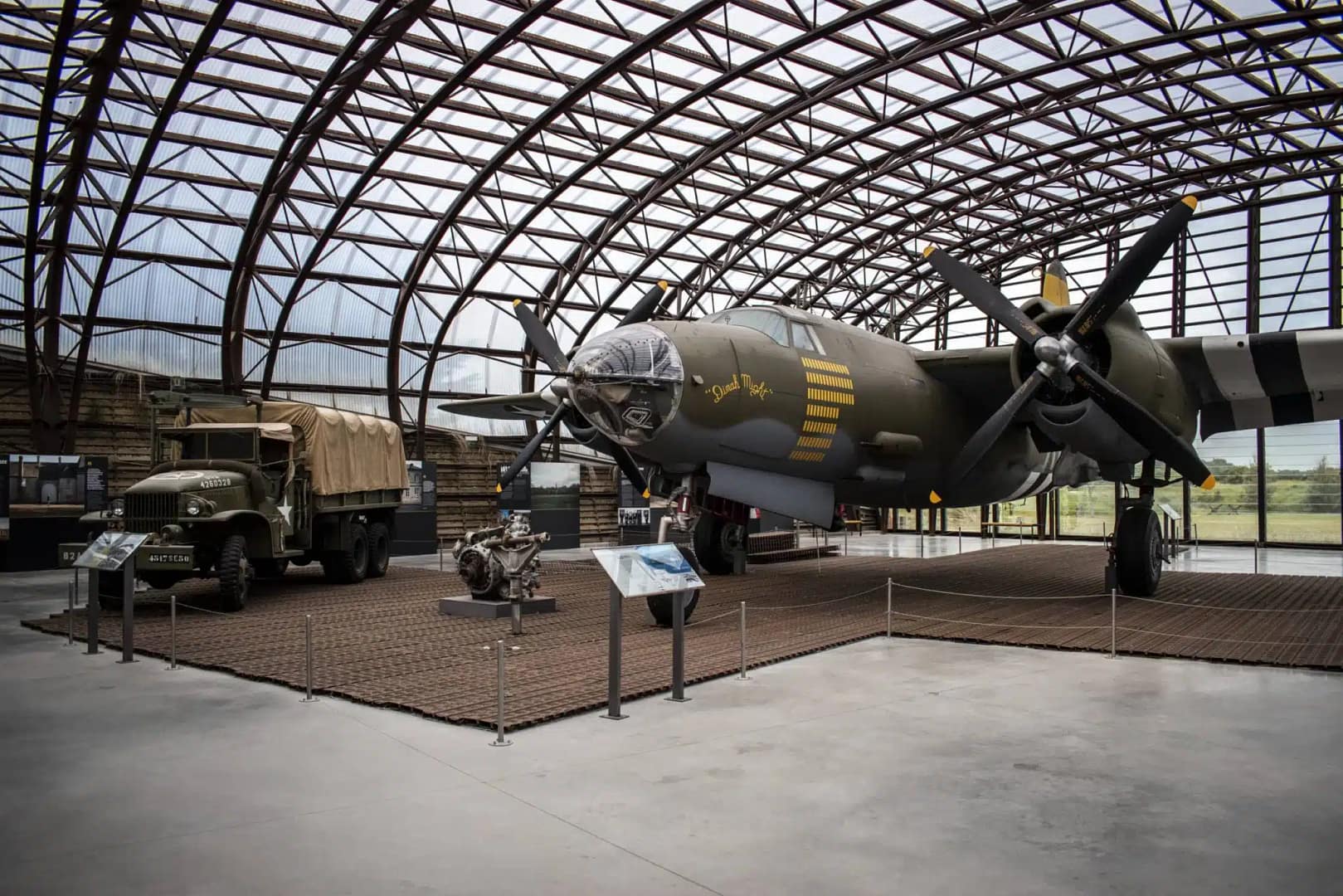
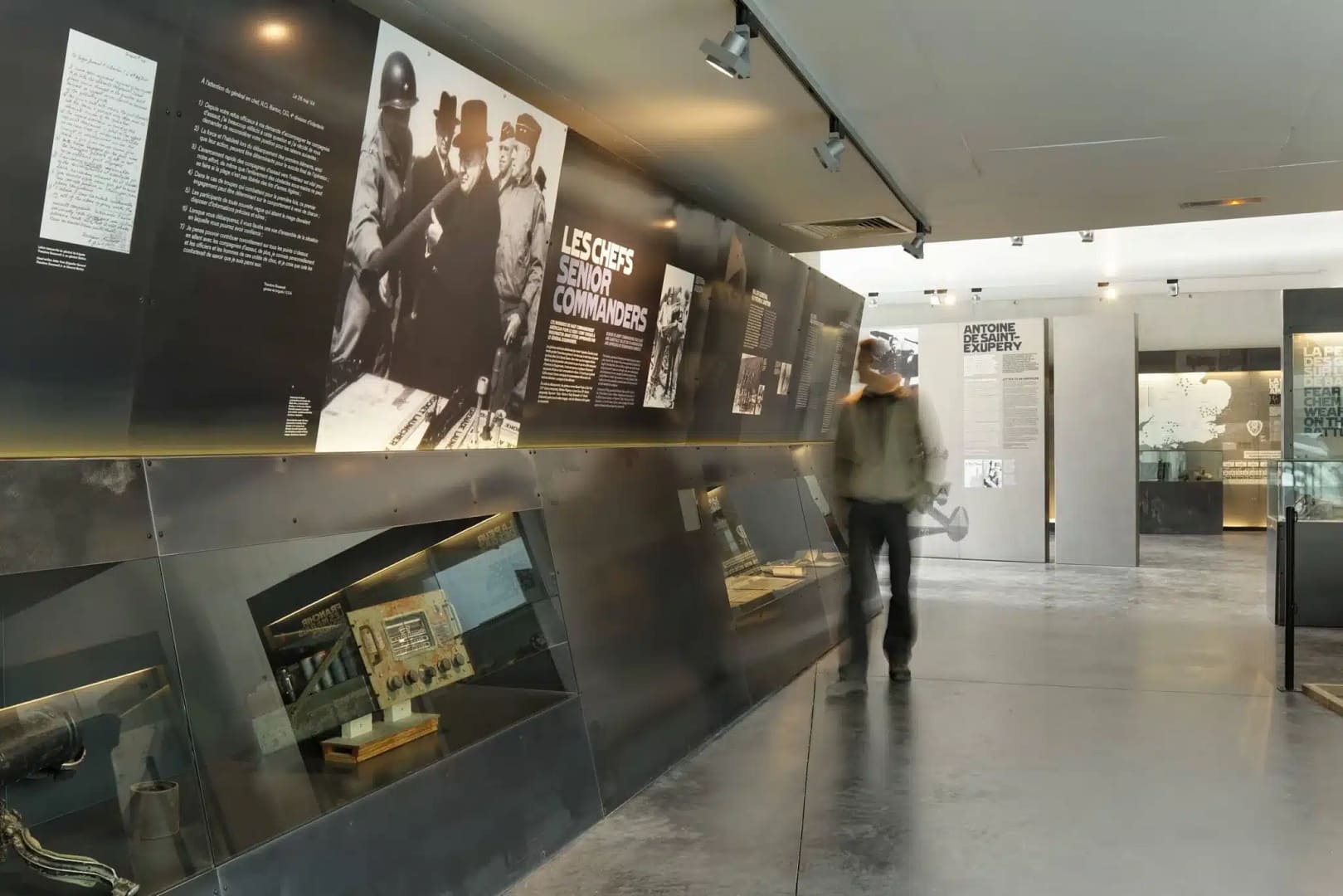
The museum opened in 1962 thanks to the efforts of Michel de Vallavieille, then mayor of Sainte-Marie-du-Mont. Today it features more than 32,000 square feet of exhibition space organized into ten chronological sections. Visitors can explore military vehicles, uniforms, weapons, archival footage, and firsthand veteran testimonies that retrace the story of the D-Day landings in Normandy.
One of the museum’s most remarkable artifacts is an authentic B-26 Marauder bomber displayed inside a specially designed glass hangar.
Other major Normandy D-Day museums and memorial sites include:
- Mémorial de Caen: a major museum dedicated to World War II and the broader history of peace and conflict
- Musée du Débarquement d’Arromanches: focused on the engineering and construction of the Mulberry harbors
- Airborne Museum: dedicated to the American airborne divisions that parachuted into Normandy before the landings
- Juno Beach Centre: honoring Canada’s role in World War II and the Normandy landings in France
Remembering D-Day: commemorations and popular culture
More than 80 years after the Normandy landings, D-Day remains one of the most powerful and widely remembered events of World War II. Its legacy continues through annual commemorations, museums, memorial sites, films, literature, and historical preservation efforts across Normandy and beyond.
D-Day commemorations in Normandy
Every year on June 6, official ceremonies take place across the Normandy landing beaches and military cemeteries. Veterans’ families, world leaders, military representatives, and visitors from around the globe gather to honor those who fought during the Normandy invasion.
The 80th anniversary ceremonies in 2024 brought together representatives from many Allied nations along the Normandy coast. In 2026, commemorations marking the 82nd anniversary of D-Day continue this tradition of remembrance, with special events organized throughout the region, including at the Utah Beach Landing Museum.
The Normandy landings in film and popular culture
The D-Day Normandy landings have had a lasting impact on global culture and collective memory.
In 1962, the film The Longest Day helped define the cinematic representation of D-Day for generations. Decades later, Saving Private Ryan transformed public perception of the Normandy invasion with its intense opening sequence depicting the assault on Omaha Beach.
The acclaimed television series Band of Brothers followed the journey of the 101st Airborne Division from training in England through the liberation of Europe. Meanwhile, the photographs taken by Robert Capa on Omaha Beach remain among the most iconic visual records of D-Day.