
Every year on June 6, Normandy once again becomes the center of international remembrance. Delegations from around the world gather along the D-Day beaches to honor the Allied soldiers who helped liberate Europe during one of the most decisive moments of World War II.
More than eight decades later, the D‑Day anniversary remains deeply meaningful. It is not just a date in the history books; it still speaks directly to families and communities across Europe. Through memorial ceremonies, museums, veterans’ families, and commemorative events across Normandy, the memory of the landings continues to resonate across generations.
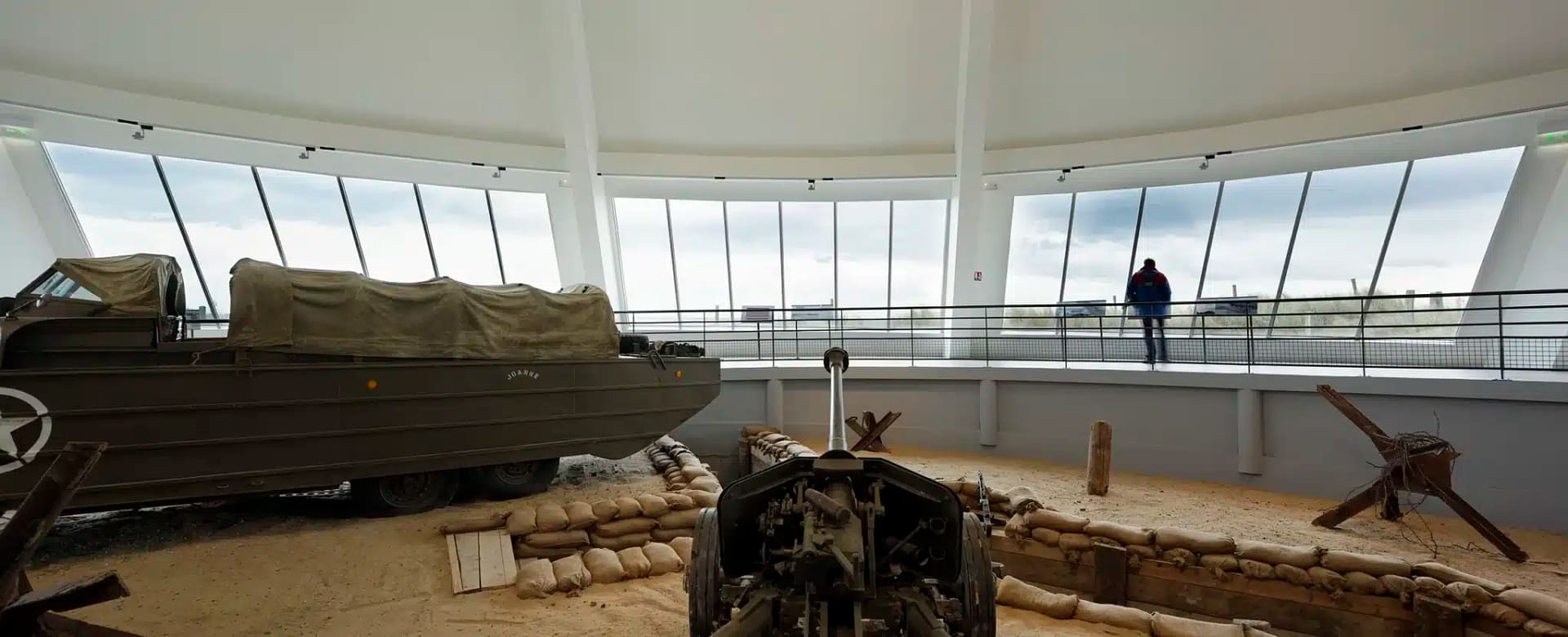
Located in Sainte-Marie-du-Mont on the exact stretch of beach where American troops landed on June 6, 1944, the Utah Beach Landing Museum plays an active role in preserving and sharing the legacy of D-Day with visitors from around the world.
June 6, 1944: historical context and the stakes of D-Day
Operation Overlord: the Allied offensive that changed the War
By the spring of 1944, Western Europe had been under Nazi occupation for years. As Germany became increasingly weakened by the war on the Eastern Front, Allied leaders sought to open a major second front in Western Europe that could accelerate the collapse of the Third Reich.
This strategy led to Operation Overlord, a massive military operation planned for months from London and supported by unprecedented manpower, equipment, and logistical coordination.
The naval phase of the invasion, known as Operation Neptune, was originally scheduled for June 5, 1944. Severe weather conditions in the English Channel forced Allied commanders to postpone the attack by 24 hours. During the night of June 5–6, thousands of Allied paratroopers were dropped behind enemy lines across the Cotentin Peninsula and eastern Normandy to disrupt German defenses and block reinforcements before the main assault began.
At dawn on June 6, Allied troops landed across five beaches stretching between the Cotentin Peninsula and the Calvados coast. The campaign then continued until August 30, 1944. It paved the way for the liberation of Paris on August 25 and ultimately contributed to Germany’s surrender on May 8, 1945.
The D-Day Beaches in Normandy
The D-Day landings in Normandy were divided into five separate sectors, each assigned to Allied forces from different nations:
- Utah Beach: American sector on the Cotentin Peninsula and the first beach successfully secured
- Omaha Beach: American sector known for the extreme violence of the fighting
- Gold Beach: British landing sector in Calvados
- Juno Beach: Canadian landing sector
- Sword Beach: British sector and the easternmost of the five D-Day beaches
Today, each of these landing zones preserves a remarkable memorial heritage, including museums, military cemeteries, monuments, and surviving sections of Hitler’s Atlantic Wall.
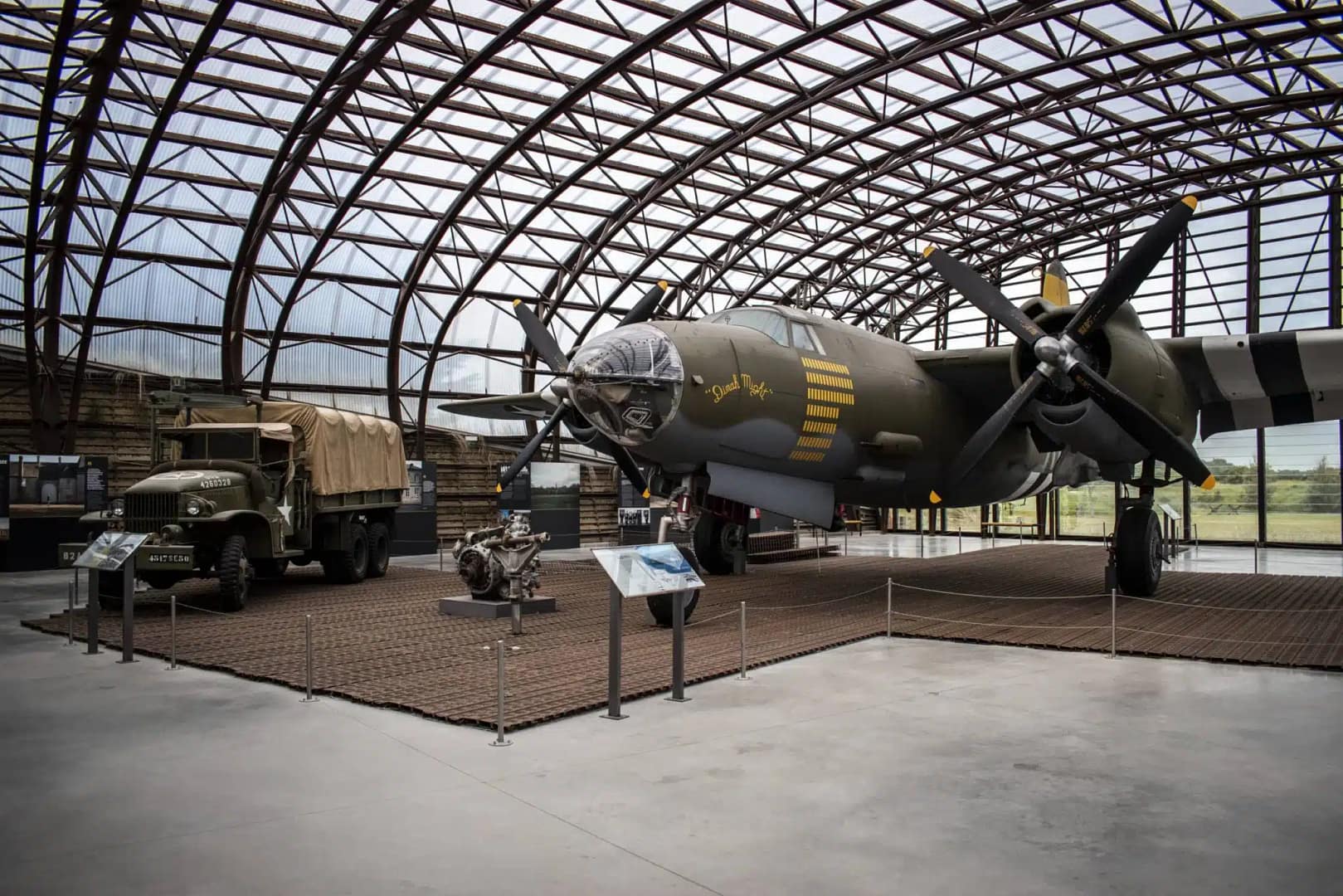
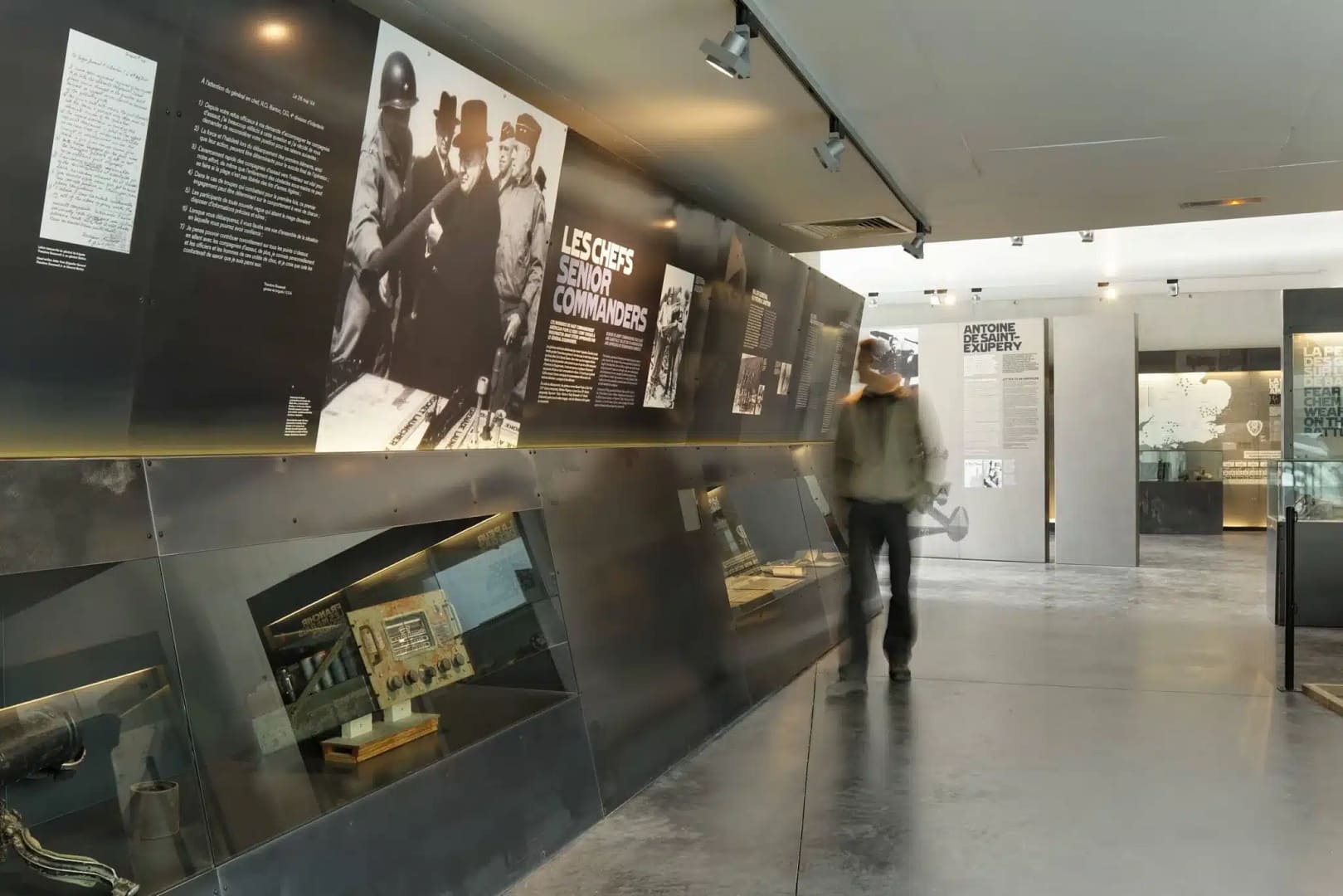
Built in 1962 in Sainte‑Marie‑du‑Mont, the Utah Beach Landing Museum retraces the story of June 6, 1944 through ten chronological exhibition sections. Together, they cover the preparation, execution, and consequences of the Normandy invasion. One of the museum’s most iconic artifacts is an original American B-26 Marauder bomber displayed inside a specially designed exhibition hangar.
Human cost and the liberation of France
By the end of D-Day, approximately 156,000 Allied troops had landed in Normandy, including 133,000 arriving by sea and another 23,000 airborne soldiers dropped behind enemy lines. Allied forces suffered roughly 10,300 casualties on June 6 alone, including several thousand killed in action. Even so, the losses were lower than what Allied planners had feared before launching the invasion. They were also well below the 25,000 casualties that had been estimated beforehand.
Throughout the entire Battle of Normandy, which lasted until the end of August 1944, approximately 37,000 Allied soldiers were killed and another 172,000 wounded. Around 20,000 Norman civilians also lost their lives, most of them during Allied bombing campaigns and combat operations.
The success of the Normandy invasion ultimately made the liberation of France possible. It also marked a decisive turning point in the war in Europe. The sacrifices remembered during every D-Day anniversary ceremony continue to symbolize both the cost of freedom and the international effort that led to the defeat of Nazi Germany.
D-Day Ceremonies: traditions, official events, and remembrance
June 6 commemorations: the History behind the ceremonies
The first official D-Day memorial ceremony took place on June 6, 1945, just one month after Germany’s surrender. Although Europe was still recovering from the devastation of war, the anniversary quickly became a powerful moment of remembrance and unity. It brought together countries that had been shaped by years of occupation and conflict.
That first ceremony brought together ambassadors from the United States, the United Kingdom, and Canada, alongside French officials and military representatives. Events began early in the morning with a reenactment of the Canadian landings at Bernières-sur-Mer, followed by military tributes and religious services held across Normandy.
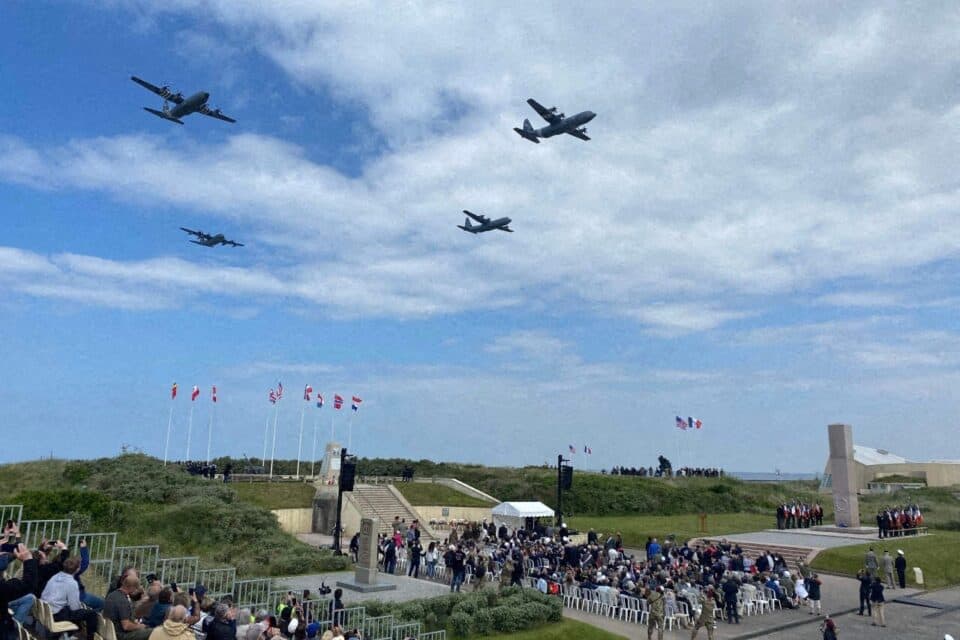
In 2026, Normandy commemorates the 82nd anniversary of D-Day with an international ceremony scheduled for June 6 in Langrune-sur-Mer. Across the Cotentin Peninsula, Utah Beach will once again host commemorative events, conferences, and historical programs dedicated to the Normandy landings and the soldiers who fought there.
For many visitors, attending a D-Day anniversary ceremony offers far more than a history lesson. It provides a direct connection to the beaches, landscapes, and stories that shaped the liberation of Europe.
What happens during a D-Day memorial ceremony?
Each June 6 follows a carefully organized schedule of commemorative events lasting from early morning into the evening.
The day usually begins with ceremonies at military cemeteries, especially at the Normandy American Cemetery overlooking Omaha Beach. Wreath-laying ceremonies, moments of silence, military honors, and the sounding of taps pay tribute to the thousands of soldiers who lost their lives during the Normandy invasion.
Official ceremonies later bring together heads of state, diplomats, military officials, and representatives from Allied nations. Speeches delivered during these gatherings are often broadcast internationally as part of the broader D-Day anniversary commemorations.
Throughout the afternoon, local ceremonies take place in towns and villages across Normandy that were directly affected by the fighting in June 1944.
At Utah Beach Landing Museum, recent 81st anniversary of D-Day programs have included:
- commemorations involving hundreds of schoolchildren
- large international ceremonies on Utah Beach attended by representatives from Allied nations
- historical conferences and educational talks
- guided visits to nearby German batteries and fortifications
- concerts, reenactments, and evening fireworks displays
Throughout the day, the atmosphere is both emotional and deeply reflective. On June 6, Utah Beach becomes more than a historic site — it becomes a place where memory, history, and personal stories come together in a uniquely powerful way.
Heads of State, veterans, and the transmission of memory
Over the decades, the D-Day anniversary has also become an important diplomatic event. The regular presence of American presidents since the era of Ronald Reagan reflects the lasting role of the United States in the liberation of Europe and in the collective memory of World War II. The participation of German representatives in some ceremonies also symbolizes the reconciliation that emerged in Europe after the war.
For many years, World War II veterans were the central figures of these commemorations. Their testimonies created a direct and deeply personal link to the events of June 6, 1944. As the number of surviving veterans continues to decline, museums and educational institutions now play an increasingly important role in preserving and transmitting the history of D-Day to younger generations.
This mission remains at the heart of the Utah Beach Landing Museum, whose exhibitions, guided tours, and immersive historical displays help visitors better understand both the D-Day landings and the critical weeks that followed during the Battle of Normandy.
Practical information for attending the June 6 D-Day commemorations
Museums, memorials, and exhibitions to visit around D-Day
Normandy is home to one of the most extensive World War II memorial networks in the world. Around every D-Day anniversary, visitors can explore museums, cemeteries, battlefields, and historic sites connected to the Normandy invasion.
Among the most important sites to visit:
The Utah Beach Landing Museum stands on the exact location where the first American troops landed on June 6, 1944. Through ten chronological exhibition sections, the museum retraces the story of D-Day from the preparation of Operation Overlord to the liberation of France. Covering more than 32,000 square feet and welcoming over 200,000 visitors during the D-Day anniversary 2024 season, it remains one of the leading museums dedicated to the Normandy landings.
Visitors can discover authentic uniforms, military vehicles, weapons, and the museum’s iconic B-26 Marauder bomber. The experience is enhanced by Victory Beach, an award-winning documentary featuring moving testimonies from American veterans who participated in the landings.
Other major memorial sites include:
- Mémorial de Caen: a major museum dedicated to the history of the 20th century and World War II
- Normandy American Cemetery: overlooking Omaha Beach, with 9,387 American graves and free year-round access
- Juno Beach Centre: dedicated to Canada’s role during D-Day and the Battle of Normandy
The Utah Beach Landing Museum also currently features a temporary exhibition focused on archaeological excavations at Brécourt Manor, a strategic site closely linked to the airborne operations conducted near Utah Beach on June 6, 1944.
How to Reach the D-Day memorial sites in Normandy
Several transportation options make it easy to reach the Normandy landing beaches and attend a D-Day memorial ceremony.
By car:
From Paris, the A13 highway reaches Caen in roughly two and a half hours. From there, regional roads connect visitors to all five D-Day beaches. To reach Utah Beach specifically, travelers typically drive through Sainte-Marie-du-Mont from Carentan via Route Nationale 13. Most museums and memorial sites offer large free parking areas.
By train:
Direct rail connections from Paris Saint-Lazare serve Caen, Bayeux, and Cherbourg. The train station at Carentan is the main gateway for visitors heading to Utah Beach and the Cotentin Peninsula.
By bus:
The regional NOMAD bus network operates routes between Normandy’s main train stations and the D-Day sites. Companies such as FlixBus and BlaBlaCar also provide affordable connections from Paris.
As the June 6 commemorations approach, security zones are established around official ceremony sites early in the morning. Visitors attending a D-Day ceremony are strongly encouraged to arrive early, use public transportation when possible, or park farther away and walk to the memorial areas.
Conclusion
Every D-Day anniversary serves as a reminder of the men and women from across the world who risked their lives to restore freedom to Europe during World War II.
Remembering their sacrifice also means ensuring that the memory of the Normandy landings continues to be passed on to future generations. Whether you come to Normandy for reflection, historical discovery, or to attend a D-Day memorial ceremony, the beaches of June 6, 1944 still carry a unique emotional weight more than 80 years later.
As preparations begin for the 82nd anniversary commemorations, visitors can explore the full program through the Utah Beach Landing Museum official website and begin planning a journey through one of the most important chapters of modern history.